CVE Lens: a one-file workbench for making sense of CVEs
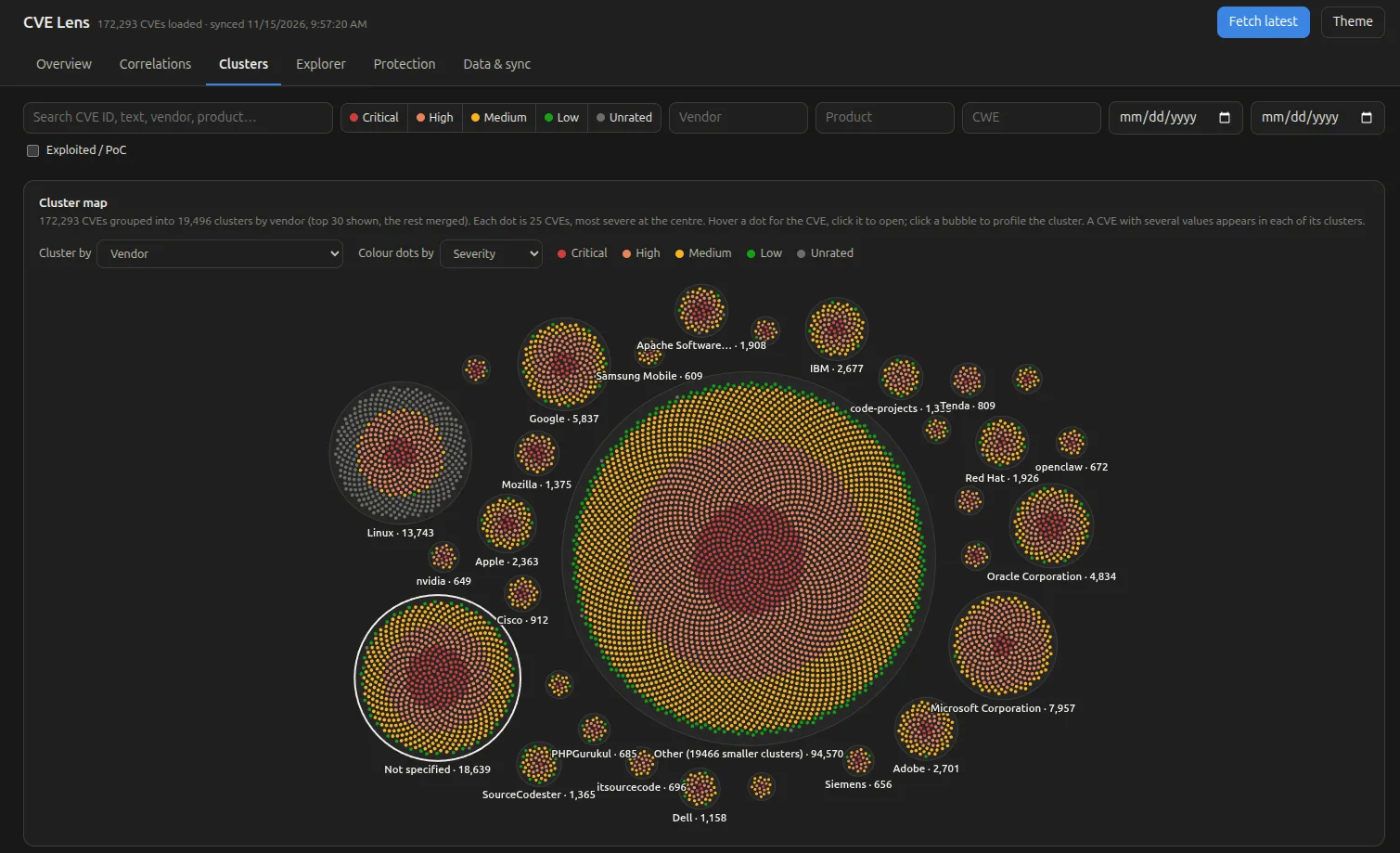
Every day the CVE Program publishes dozens of new vulnerability records to its public repository, CVEProject/cvelistV5. The data is open, but it is raw JSON spread across hundreds of thousands of files. Reading one record is easy. Seeing the patterns across thousands of them is not.
So I built CVE Lens: an interactive analyst workbench that lives in a single HTML file. There is no backend, no install and no dependencies. You open it in a browser and it pulls CVE records live from the official repository, then keeps them in your browser.
Try it here: darsh.im/p/cve-lens
What it answers
- What is happening? An overview with key findings, severity mix, attack vectors, top vendors, products and weaknesses, plus monthly trend lines per severity level.
- How are things connected? A relationship map linking vendors, products and weakness types, a vendor × weakness heatmap, and a view of which vendors are hit by the same CVEs.
- What groups exist? A cluster view that groups CVEs by any feature you choose, or finds groups automatically by similarity across weakness, attack profile, vendor and description text.
- How did it happen? Each CVE gets a step-by-step attack path derived from its CVSS vector and root-cause weakness: where the attacker must be, whether a login is needed, whether a victim has to act, and what the impact is.
- How do I protect myself? Fixed versions, vendor solutions and workarounds quoted from the record, a patch-first priority queue, and defensive controls grouped by root-cause family.
Staying current
CVE Lens can fetch the latest repository update, the most recently changed records, a recent time window, specific CVE IDs, or whole years. It also flags CVEs that CISA lists as known exploited, so the urgent ones surface first.
Why one file?
Because it can go anywhere. Host it on any static server, drop it on an internal share, or run it from disk. Your data never leaves the browser, and you can export or import datasets for offline use.
A note on limits
The priority score is a heuristic, not a standard, and the general protection guidance is derived from the CVSS vector and weakness class. Always confirm against the vendor advisory before acting.
If you work in vulnerability management, threat intelligence or security operations, I'd love your feedback on what would make this more useful.
#CyberSecurity #CVE #VulnerabilityManagement #ThreatIntelligence #InfoSec #SecurityAnalytics #DataVisualization #OpenData #CISA #CWE #CVSS #BlueTeam #SecOps #PatchManagement